- 603-824-3883
- 166 S River Rd ste 110b, Bedford, NH, USA

Hearing Tests
Hearing Tests in Amherst, New Hampshire
If you live near the Amherst village green and have started asking around about hearing testing, you have probably noticed there is not much locally beyond a general practitioner referral or a big-box hearing aid retailer off the highway. Most of the calls we get from Amherst come from people who drove past a kiosk-style hearing aid store, felt talked at rather than listened to, and decided to look for something else before committing to anything. Often it is an adult son or daughter making the call for a parent who has lived on the same road for thirty years and is not in a hurry to be sold something.
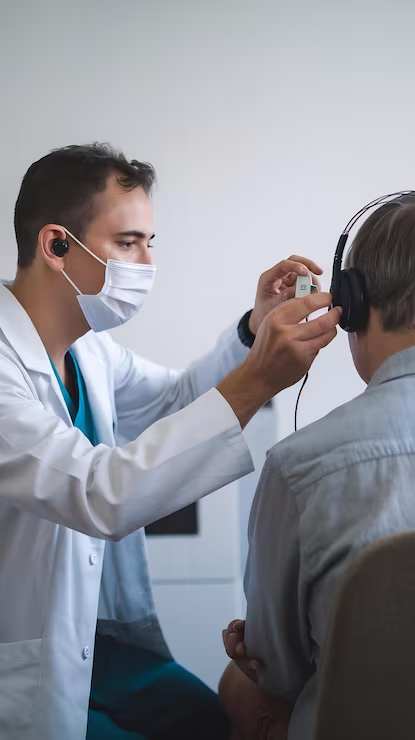
What Happens During Your Hearing Test
Hearing Tests for Amherst residents
A hearing test, done properly, is a diagnostic appointment, not a fitting appointment. It exists to answer one question with actual data: what is happening with your hearing right now, across which frequencies, and why. For someone who has been wondering about this for a year or five years, that answer is the entire point of the visit.
This is advanced diagnostics, not a screening you’d get at a health fair. It measures how you hear across pitch and volume, how well you understand speech in quiet versus noise, and whether what you’re noticing traces back to the inner ear, the middle ear, or something else that needs a different kind of doctor entirely. A meaningful number of people who come in for a first hearing test leave with a plan that involves no hearing aids at all, at least not yet. That outcome is not a failure of the visit. It is exactly what a good diagnostic test is supposed to be able to tell you.
A real conversation first.
Before any equipment comes out, your audiologist asks about what you're noticing — trouble on the phone, missing words at dinner, the TV creeping louder. This shapes what we look for.
Otoscopic exam.
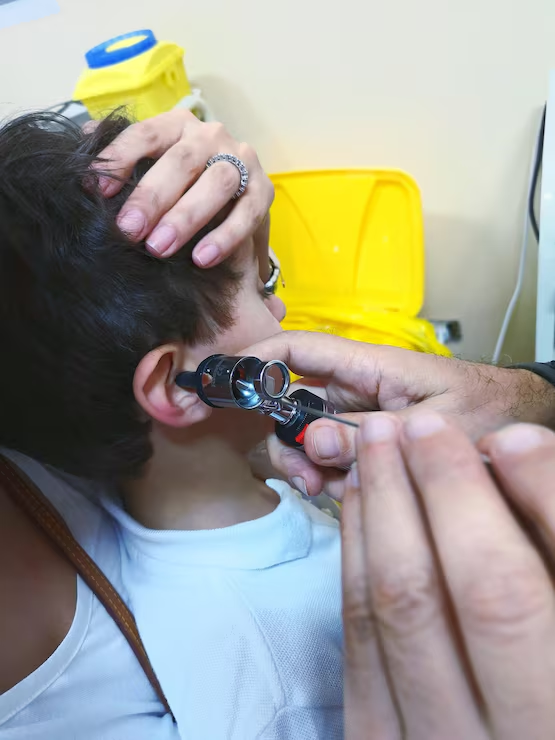
A quick look inside the ear canal rules out wax buildup or anything structural that could be affecting your hearing.
Pure-tone audiometry.
You'll wear headphones in a sound booth and respond to a range of tones and pitches. This maps exactly which frequencies you're hearing well and which ones you're missing.
Speech testing.
Because hearing loss often shows up as words getting muddy before volume drops, we test how clearly you understand speech, including in background noise.
Your results, explained.
You'll see your audiogram and hear what it means in terms you can actually use — not just numbers on a chart.
What happens at your appointment
You will spend time in a sound-treated booth, a small room built specifically to remove outside noise so we can measure your hearing with precision rather than guesswork. Wearing headphones, you will respond to a series of tones at different pitches and volumes. This part is called pure-tone audiometry and it is what produces the audiogram, a chart plotting the softest sounds you can detect at each frequency.
Alongside that, we run speech testing, playing words at controlled volumes to see how clearly you understand them, and often a version with background noise added, since that is where most people first notice trouble even when a basic tone test looks fine. We may also check middle ear function to rule out fluid, wax, or eardrum issues that mimic hearing loss but have nothing to do with the inner ear.
The whole appointment typically runs under an hour. Before you leave, we walk through your audiogram with you line by line so you understand what the shape of that chart means for your specific hearing, not a generic explanation. You walk out with information, not a quote.

Signs a Hearing Test in Amherst Might Be Worth Booking
Hearing changes so gradually that most people adjust around it for years before they notice. A few signals worth paying attention to:
- Turning the TV or radio up louder than family members prefer
- Asking people to repeat themselves, especially in groups
- Struggling to follow conversation in restaurants or at Amherst Village Common events
- Feeling like people are mumbling more than they used to
- Avoiding phone calls or social gatherings because following along feels tiring
- A partner or family member mentioning it more than once
The technology
The equipment behind a modern hearing test has changed considerably even in the last decade. Testing software now models real-world listening environments rather than just isolated tones, which matters because most complaints we hear are about restaurants, car rides, and group conversations, not silence. On the treatment side, if a test does point toward hearing aids, the devices themselves function less like the amplifiers people remember from a parent’s generation and more like small computers, capable of adjusting automatically to different environments and connecting to phones and other devices.
We do not sell or push any particular manufacturer. Part of a personalized hearing solution is understanding the actual range of what is available, from entry-level to advanced, and matching that to your hearing profile, your lifestyle, and your budget, not a sales quota.
After Your Hearing Test in Amherst
Getting here from Amherst
Quest Audiology is located at 166 S River Rd Ste 110b in Amherst. From most of Amherst, that is a straightforward drive along Route 101 East toward the South River Road corridor, typically 15 to 20 minutes depending on whether you’re starting near the village green or out toward the Milford line. There is free on-site parking directly outside the building, so there is no garage to navigate and no meter to feed. We do not have a satellite office in Amherst itself; the Amherst location is where all diagnostic testing takes place.

Why Amherst Residents ChooseQuest Audiology
Your audiologist
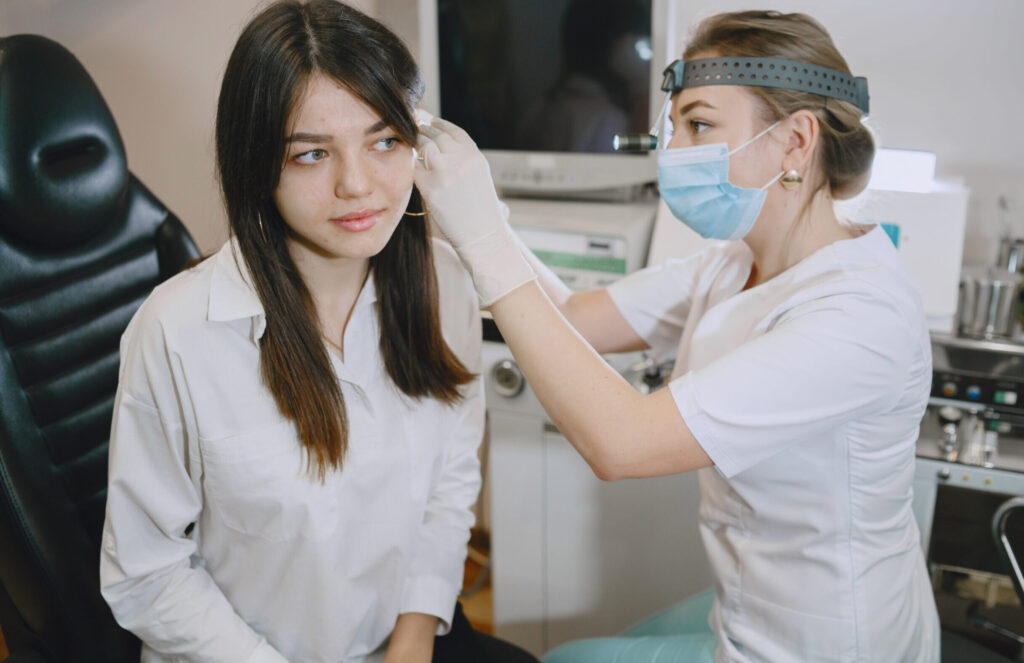
Your test is conducted by {AUDIOLOGIST}, {CREDENTIALS}, who has spent {YEARS_IN_PRACTICE} focused specifically on diagnostic hearing evaluation and hearing technology fitting. The goal at Quest is a premium patient experience built around a real clinician’s judgment, not a script. You can read more about {AUDIOLOGIST}’s background and approach at {BIO_URL}.
Your Audiologist
Common questions
Areas We Serve Near Amherst, NH
Quest Audiology also provides hearing tests for patients throughout the greater Manchester area, including:
Manchester
Merrimack
Litchfield
Goffstown
Hooksett
Nashua
Londonderry
Amherst
Milford
FAQs
How long does a hearing test take?
About 45 minutes, including time to review your results together.
Does insurance cover a hearing test?
Many plans cover diagnostic hearing tests, including Medicare in most cases. We can check your specific coverage before your visit.
Will I be pressured to buy hearing aids?
No. The test is diagnostic — if hearing aids make sense, we’ll explain your options, but there’s no obligation.
Do I need a referral from my doctor?
No referral is needed. You can book a hearing test in Amherst, NH directly with us.
At what age should someone get their hearing tested?
Any age, if something feels off. As a baseline, adults over 50 benefit from a hearing check every couple of years.
What should I bring to my appointment?
A list of any medications, a family member if you’d like a second set of ears for the conversation, and any hearing aids you currently wear, if applicable.
Ready for Your Hearing Test in Amherst, NH
Schedule a Hearing Test today, or Call Today at 603-824-3883 to find a time that works.
Quest Audiology
166 S River Rd, Ste 110B
Amherst, NH
603-824-3883