- 603-824-3883
- 166 S River Rd ste 110b, Bedford, NH, USA

Hearing Aid Programming
Hearing Aid Programming In Amherst, New Hampshire
Amherst doesn’t have a big-box hearing aid counter or a walk-in clinic on the village green, so residents who bought devices through a warehouse club in Nashua or an online outfit years ago often have nowhere close to actually go when those aids stop working the way they used to. What usually happens instead is people wait. They adjust the volume manually, avoid noisy dinners at the restaurants near the common, and figure the device is simply what it is now. It doesn’t have to be.

What Programming Actually Adjusts
Hearing Aid Programming for Amherst residents
Hearing aid programming is the process of adjusting a device’s settings so it matches your current hearing, your listening environments, and how you actually use it day to day. It’s not a repair and it’s not a sale. If you already own hearing aids, whatever brand, whoever sold them to you, this is the appointment where someone sits down, connects them to diagnostic software, and makes them fit the ears they’re in now.
Hearing changes gradually, often so slowly that people don’t notice until a device set once, years ago, no longer matches. That’s the gap this service fills. It’s also a natural next step for anyone who has spent years wondering about their hearing but hasn’t wanted to walk into what feels like a medical appointment to find out more. This one doesn’t feel like that.
When You'd Need a Programming Adjustment
Sounds feel too sharp or too loud.
Common in the first few weeks as your brain relearns sounds it's been missing.
Speech is hard to follow in noise.
Restaurants, family gatherings, and car rides often need separate settings.
Your own voice sounds strange.
A quick adjustment usually resolves this without changing anything else.
You're hearing whistling or feedback.
Often a fit or seal issue that programming and a physical check can both address.
Your hearing has changed.
A new hearing test means the programming should be updated to match it.
You've moved into a new routine.
A new job, a new home, more time outdoors — all reasons settings might need to shift.
How a Programming Visit Works
What happens at your appointment
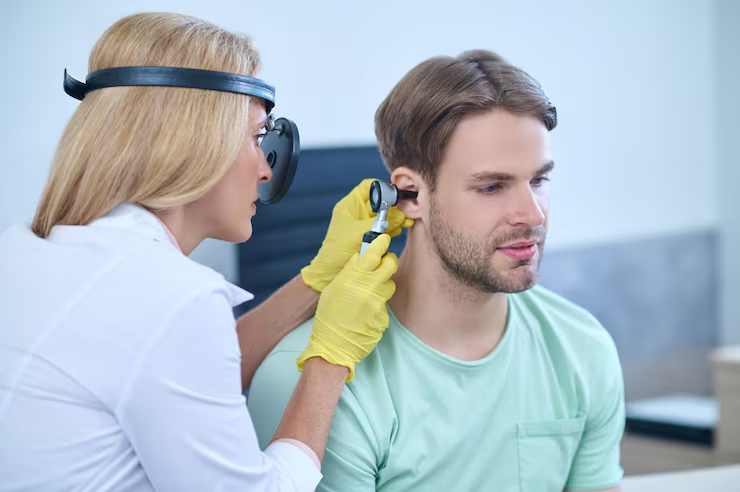
- A conversation first. Before any equipment comes out, we talk through what’s working, what isn’t, and where you’re struggling, whether that’s phone calls, restaurants, or the TV.
- Diagnostic measurement. Your current hearing is measured and compared against what the device is actually doing. This is where a gap between the two usually becomes obvious.
- Real-time adjustment. Programming happens on a computer connected directly to your device, in the room, while you’re there. You hear the changes as they’re made, not after the fact.
- Time. Most programming appointments run about 45 minutes to an hour, depending on how much needs adjusting.
- What you leave with. Not just a tweaked device, but an actual understanding of why it was set the way it was, and what changed.

Remote Programming Between Visits
The technology
Modern hearing technology has moved a long way from the analog aids of a decade or two ago. Current devices process sound digitally, adjust automatically between quiet and noisy settings, and in many cases connect directly to phones and other devices over Bluetooth. Several manufacturers now build in features like directional microphones that can be tuned to a specific listening scenario, or rechargeable batteries that remove the daily fuss of tiny disposables.
None of this is about one brand being better than another. It’s about understanding what your particular device can actually do, because most people are using a fraction of their hearing aid’s real capability simply because no one ever sat down and set it up properly for their life.

Programming Isn't a One-Time Event
Getting here from Amherst
Quest Audiology is located at 166 S River Rd, Ste 110b, in Amherst. From the Amherst village green, it’s a straightforward drive: south on Route 101 toward Amherst, then onto South River Road. Most Amherst patients find it takes about fifteen minutes door to door, with free on-site parking right at the building.
Why Amherst Residents Choose Quest Audiology for Programming
Your audiologist
Appointments are led by {AUDIOLOGIST}, {CREDENTIALS}, who has spent {YEARS_IN_PRACTICE} working specifically with hearing diagnostics and device programming. The Au.D. credential means years of doctoral-level training beyond a general medical degree, focused entirely on how hearing works and how technology can be set up to support it. You can read more about that background at {BIO_URL}.
Your Audiologist
Common questions
Areas We Serve Near Amherst, NH
Quest Audiology also provides hearing tests for patients throughout the greater Manchester area, including:
Manchester
Merrimack
Litchfield
Goffstown
Hooksett
Nashua
Londonderry
Amherst
Milford
FAQs
How often should hearing aids be reprogrammed?
Most patients need a few adjustments in the first months after fitting, then check-ins every six to twelve months, or sooner if hearing or lifestyle changes.
Does hearing aid programming cost extra?
Follow-up programming visits are included as part of your care. There’s no separate charge for coming back to adjust settings.
Can programming fix whistling or feedback?
Sometimes. Feedback is often a fit issue rather than a settings issue, so we check both during a programming visit.
Do I need a new hearing test before reprogramming?
Not always. Minor adjustments don’t require a new test, but if it’s been over a year, we’ll usually recommend one to make sure the programming still matches your hearing.
Can any audiologist reprogram hearing aids from another provider?
In most cases, yes, using manufacturer software. Bring your devices in and we’ll confirm compatibility during your visit.
Is remote programming as good as an in-person visit?
It works well for small tweaks. Anything involving real-ear verification or a physical fit check still needs an in-office appointment.
Ready to Schedule Your Hearing Aid Fitting in Amherst, NH
Request a Consultation or Call Today at 603-824-3883 to schedule a programming visit. Prefer to start with a full check first? Schedule a Hearing Test.
Quest Audiology
166 S River Rd, Ste 110B
Amherst, NH
603-824-3883