- 603-824-3883
- 166 S River Rd ste 110b, Bedford, NH, USA

Hearing Tests
Hearing Tests in Londonderry, New Hampshire
If you live near Exit 4 or off Route 102 in Londonderry, chances are you have already driven to Manchester or Derry for something specialized, whether that’s a dentist, an orthodontist, or a specific kind of doctor your primary care office doesn’t have on site. Hearing care usually falls into that same category. Most Londonderry residents who’ve started wondering about their hearing, or their parent’s hearing, haven’t had a clear, nearby place to actually get it checked. That’s the gap this page is for.
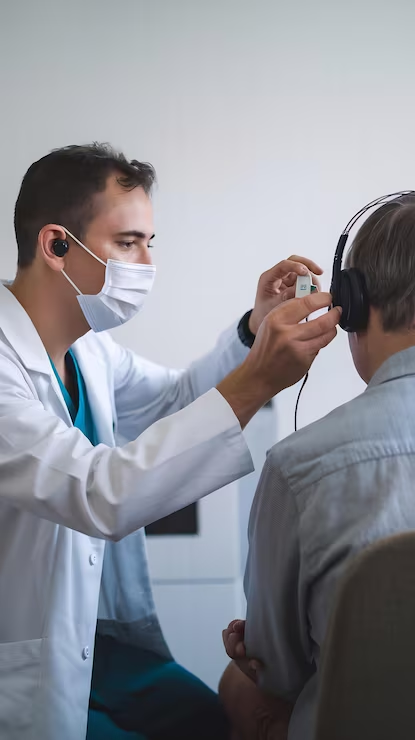
What Happens During Your Hearing Test
Hearing Tests for Londonderry residents
A hearing test, done properly, is a diagnostic appointment, not a sales pitch. It’s for the person who has noticed the TV creeping louder over a few years, who asks people to repeat themselves at family dinners in Londonderry’s older neighborhoods off Mammoth Road, or who has simply been meaning to check for a while and never got around to it.
Quest Audiology’s approach centers on advanced diagnostics first. A full audiologic evaluation measures how you hear across a range of pitches and volumes, checks how your middle ear is functioning, and identifies whether what you’re noticing is even something that treatment addresses. Plenty of appointments end with a conversation about monitoring things annually rather than a conversation about devices. That outcome is a legitimate, common, and useful one, and it’s exactly the kind of result a real diagnostic test should be able to produce.
A real conversation first.
Before any equipment comes out, your audiologist asks about what you're noticing — trouble on the phone, missing words at dinner, the TV creeping louder. This shapes what we look for.
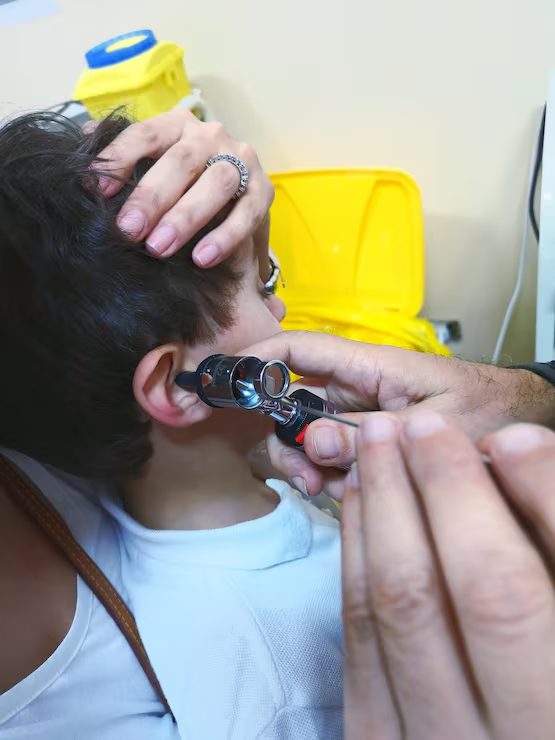
Otoscopic exam.
A quick look inside the ear canal rules out wax buildup or anything structural that could be affecting your hearing.
Pure-tone audiometry.
You'll wear headphones in a sound booth and respond to a range of tones and pitches. This maps exactly which frequencies you're hearing well and which ones you're missing.
Speech testing.
Because hearing loss often shows up as words getting muddy before volume drops, we test how clearly you understand speech, including in background noise.
Your results, explained.
You'll see your audiogram and hear what it means in terms you can actually use — not just numbers on a chart.
What happens at your appointment
The test itself happens in a sound-treated booth, which is a small, quiet room built specifically so background noise can’t interfere with the results. Inside, you’ll wear headphones and respond to a series of tones at different pitches and volumes, and separately to spoken words, so the audiologist can measure both what you can detect and what you can actually understand.
The equipment includes an audiometer for the tone testing and often tympanometry equipment, which checks how your eardrum moves and flags issues like fluid or wax before they get mistaken for hearing loss. The whole appointment typically runs under an hour.
You’ll leave with an audiogram, a chart plotting the softest sounds you can hear at each pitch. Low, rumbly sounds sit on the left, high, sharp sounds on the right, and volume runs top to bottom, quiet at the top. Your audiologist will walk through where your results fall on that chart and what it means in plain terms, not just hand you a printout and move on. That explanation, not a product recommendation, is the actual point of the visit.

Signs a Hearing Test in Londonderry Might Be Worth Booking
Hearing changes so gradually that most people adjust around it for years before they notice. A few signals worth paying attention to:
- Turning the TV or radio up louder than family members prefer
- Asking people to repeat themselves, especially in groups
- Struggling to follow conversation in restaurants or at Londonderry Village Common events
- Feeling like people are mumbling more than they used to
- Avoiding phone calls or social gatherings because following along feels tiring
- A partner or family member mentioning it more than once
The technology
Hearing technology has changed considerably in the last several years, largely because of shifts in general consumer electronics, not just medical devices. Devices now connect directly to phones, adjust automatically as a room gets louder or quieter, and run on rechargeable batteries instead of the disposable ones many people still associate with hearing aids.
None of that matters yet at the testing stage. The point of this page is diagnosis and education, so you understand your own hearing profile and your options clearly before any conversation about personalized hearing solutions ever comes up. Quest doesn’t push a particular manufacturer or model. The goal is that you understand the landscape well enough to make your own call, whenever you’re ready to make it.
After Your Hearing Test in Londonderry
Getting here from Londonderry
Quest Audiology is located at 166 S River Rd Ste 110b in Londonderry. From most parts of Londonderry, that’s a straightforward drive up Route 102 toward South River Road, generally under twenty minutes depending on where in town you’re starting from and airport-area traffic near the Manchester-Boston Regional Airport interchange. Parking is on site, so there’s no separate garage or meter to deal with before your appointment.

Why Londonderry Residents ChooseQuest Audiology
Your audiologist
Appointments are led by {AUDIOLOGIST}, {CREDENTIALS}, who has spent {YEARS_IN_PRACTICE} focused on diagnostic hearing care and hearing technology. The approach here is closer to a specialist walking you through your own results than a clinician moving through a checklist. You can read more about their background and approach on their full bio page.

Your Audiologist
Common questions
A few things Londonderry residents tend to ask before booking.
Areas We Serve Near Londonderry, NH
Quest Audiology also provides hearing tests for patients throughout the greater Manchester area, including:
Manchester
Merrimack
Litchfield
Goffstown
Hooksett
Nashua
Londonderry
Amherst
Milford
FAQs
How long does a hearing test take?
About 45 minutes, including time to review your results together.
Does insurance cover a hearing test?
Many plans cover diagnostic hearing tests, including Medicare in most cases. We can check your specific coverage before your visit.
Will I be pressured to buy hearing aids?
No. The test is diagnostic — if hearing aids make sense, we’ll explain your options, but there’s no obligation.
Do I need a referral from my doctor?
No referral is needed. You can book a hearing test in Londonderry, NH directly with us.
At what age should someone get their hearing tested?
Any age, if something feels off. As a baseline, adults over 50 benefit from a hearing check every couple of years.
What should I bring to my appointment?
A list of any medications, a family member if you’d like a second set of ears for the conversation, and any hearing aids you currently wear, if applicable.
Ready for Your Hearing Test in Londonderry, NH
Schedule a Hearing Test today, or Call Today at 603-824-3883 to find a time that works.
Quest Audiology
166 S River Rd, Ste 110B
Londonderry, NH
603-824-3883