- 603-824-3883
- 166 S River Rd ste 110b, Bedford, NH, USA
Hearing Aids
Hearing Aids in Goffstown, New Hampshire
If you’ve mentioned your hearing to a doctor at the Goffstown Health Center, chances are you got a referral slip and not much else. Most people in the village end up driving to Manchester or Nashua for the next step, if they take it at all, and a lot of them just don’t. The ones who do usually aren’t twenty-somethings home from Saint Anselm. They’re adults who’ve been noticing the TV volume creep up for a few winters, or an adult child who finally said something after a holiday visit made it obvious.

A Different Way to Think About Hearing Aids
Hearing Aids for Goffstown residents
Hearing aids are the last step in a process, not the first. Before anyone talks about a device, the real question is what your hearing is actually doing: which frequencies are affected, whether it’s symmetrical, whether it’s the kind of loss a device addresses well or something that needs a referral elsewhere first. That’s the part most people skip when they read online reviews or walk into a big-box store’s hearing counter.
Quest Audiology treats that first step as the whole point. We’re a hearing technology practice, not a retail counter with a doctor’s name on the door. If you’ve spent years wondering whether it’s worth looking into, this is the visit that answers that question with actual data instead of a guess.
How We Match Technology to Your Hearing
What happens at your appointment
The appointment doesn’t feel like a hospital visit. There’s no waiting room lined with pamphlets about ear infections. You sit down with one person for the whole visit, and the equipment is closer to a sound booth than an exam table.
- Case history first. What you’ve noticed, when it started, what situations are hardest (phone calls, restaurants, group conversation).
- Diagnostic testing. Pure-tone and speech testing in a sound-treated booth, which maps exactly which frequencies and volumes you’re missing, not just a pass/fail.
- A plain-language review. You see your own audiogram and understand what it means before anyone mentions a device.
- Options, not a pitch. If hearing aids are appropriate, you’ll hear about categories and features relevant to your specific results and your specific life, not a single product pushed at you.
Most first visits run about an hour. You leave knowing your actual hearing status, on paper, whether or not you do anything else that day.
Your audiogram sets the range.
The frequencies and volumes you're missing narrow down which devices can actually help.
Your lifestyle shapes the choice.
Someone who spends weekends at Goffstown Village Common events needs different noise handling than someone mostly on video calls at home.
You hear a few options, not one.
We're not tied to a single manufacturer, so the comparison is based on what works for your ears, not what's easiest to sell.
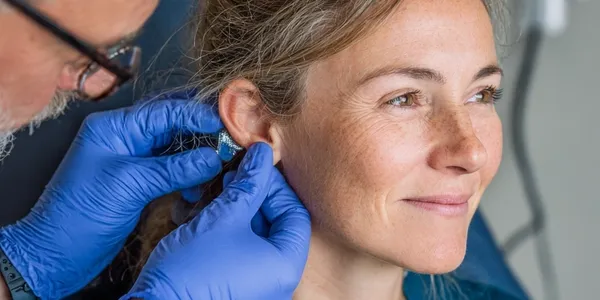
The fitting is programmed to you.
Once you choose, we fine-tune the device to your specific hearing test results, not a factory default.

What's Changed in Hearing Aid Technology
A lot of what people assume about hearing aids is a decade out of date. Current devices commonly include:
- Automatic adjustment between quiet rooms, traffic, and crowded restaurants
- Direct streaming from phones and TVs
- Rechargeable batteries instead of the small disposable ones
- Remote programming adjustments between visits
- Speech-focusing technology that filters background noise
The technology
What’s changed in the last few years has less to do with hearing and more to do with computing. Modern hearing aids are small computers tuned for sound, and the shift shows up in a few concrete ways:
- Processing power. Devices now separate speech from background noise in real time instead of just amplifying everything equally, which is the single biggest complaint people have about older hearing aids.
- Rechargeable batteries. Most current devices charge overnight like a phone, which has largely replaced the old disposable-battery routine.
- Direct streaming. Many devices connect straight to a smartphone for calls and audio, no separate accessory required.
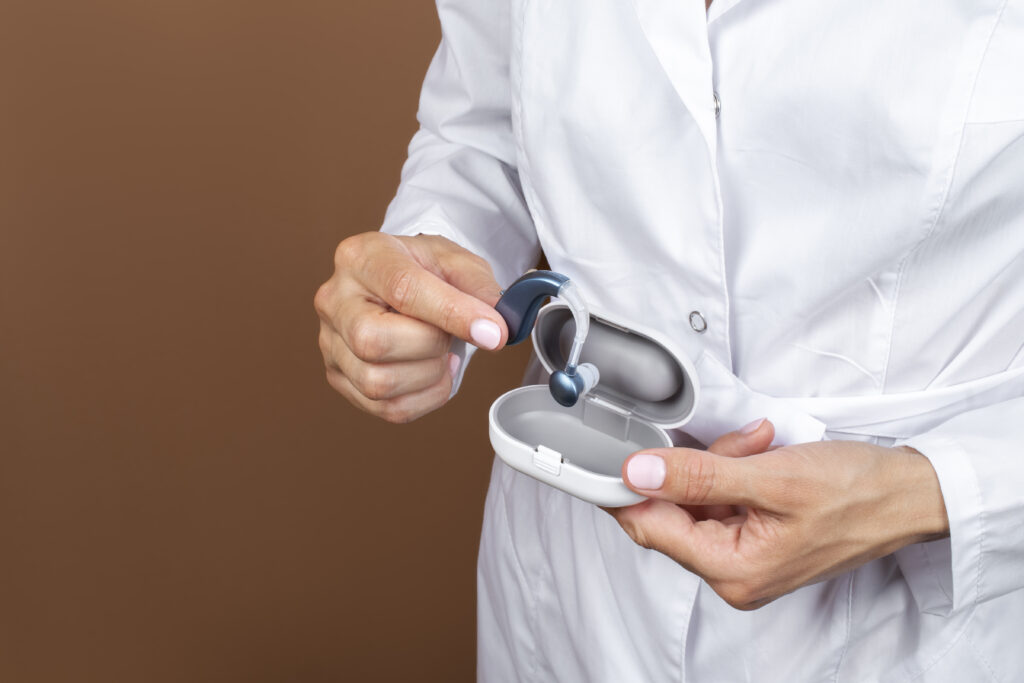
- Form factor. Options now range from nearly invisible in-canal styles to behind-the-ear models built for more significant loss, and the right one depends on your ear anatomy and your results, not on preference alone.
We don’t sell one manufacturer’s line as the answer. Personalized hearing solutions means matching the device category to your audiogram and your daily life, then explaining the tradeoffs honestly before you spend anything.
Styles of Hearing Aids We Fit
Getting here from Goffstown
Quest Audiology is at 166 S River Rd, Suite 110b, in Goffstown. From the Goffstown village center, it’s a straightforward drive out Route 114 toward Goffstown, roughly 15 minutes depending on traffic through the Piscataquog area and the roundabouts near the town line. There’s no ferry-like backup through Manchester proper if you take the more direct back roads. Parking is on-site, and the office is set up like a modern practice, not a clinic waiting room stacked with other patients.
Receiver-in-canal (RIC).
Small, sits behind the ear with a thin wire to the ear canal. The most common style we fit, and a good starting point for mild to moderate loss.
Behind-the-ear (BTE).
Slightly larger, built for more severe hearing loss or anyone who finds smaller devices harder to handle.
In-the-ear (ITE) and in-the-canal (ITC).
Custom-molded to sit inside the ear itself, for patients who prefer a less visible option.
Completely-in-canal (CIC).
The smallest and most discreet option, though not suitable for every hearing profile.
Your audiologist
Appointments are with {AUDIOLOGIST}, {CREDENTIALS}, who has spent {YEARS_IN_PRACTICE} focused specifically on diagnostic audiology and hearing technology fitting. You’ll work with the same person for testing, technology discussion, and any follow-up programming, not a rotating staff. Read more about their background at {BIO_URL}.

Why Goffstown Residents Choose Quest Audiology
A lot of our Goffstown patients come in the same way — a recommendation from someone at Goffstown Village Common, or a family member near Riddle Brook or Peter Woodbury who’s tired of repeating themselves at dinner. What keeps them coming back for hearing aids in Goffstown is the same reason they came in for the hearing test: nobody’s pushing a brand, and every adjustment afterward is included, not billed separately.
Your Audiologist
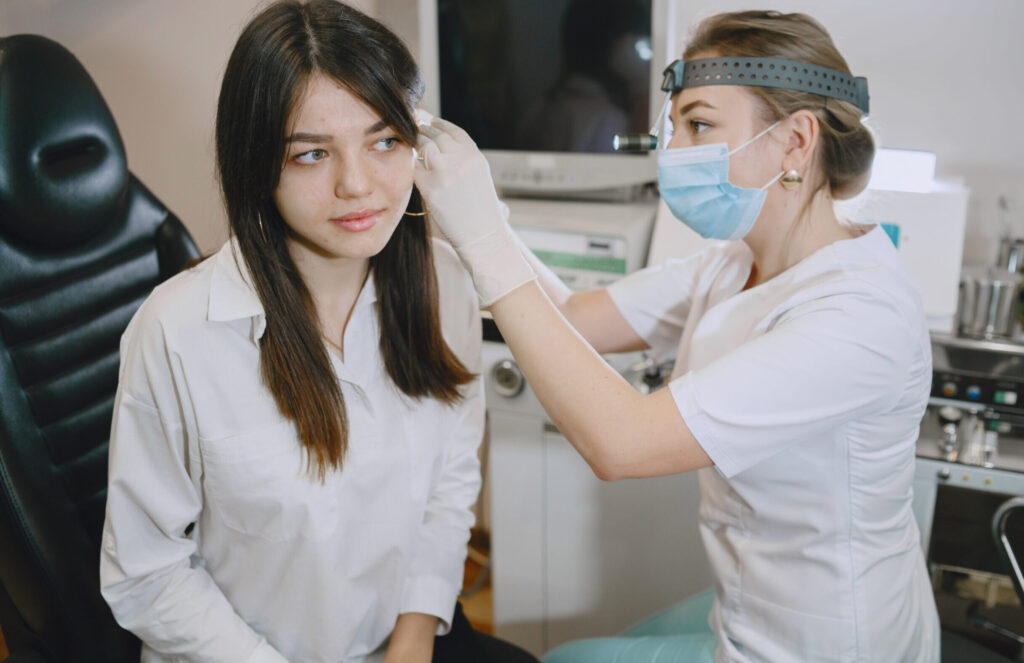
Every fitting is handled by a licensed, doctoral-level audiologist
Areas We Serve Near Goffstown, NH
Quest Audiology also provides hearing tests for patients throughout the greater Manchester area, including:
Manchester
Merrimack
Litchfield
Goffstown
Hooksett
Nashua
Londonderry
Amherst
Milford
FAQs
How much do hearing aids cost?
It depends on the technology level and your specific hearing loss. We’ll give you real numbers after your hearing test, not before.
Does insurance cover hearing aids?
Coverage varies by plan. We’ll check yours and walk you through what’s covered before you commit to anything.
Do I need a hearing test before getting hearing aids?
Yes. Fitting hearing aids without current diagnostics is guesswork — the test is what makes the fitting accurate.
Can I try hearing aids before committing?
Most devices come with a trial period so you can wear them in your actual daily life before deciding.
How long do hearing aids last?
Typically 4 to 6 years with proper care, though battery type and usage affect that range.
What happens if my hearing changes after I get hearing aids?
We reprogram the device to match. Hearing changes gradually, and most modern hearing aids can be adjusted without needing a full replacement.
Ready for Your Hearing Test in Goffstown, NH
Schedule a Hearing Test today, or Call Today at 603-824-3883 to find a time that works.
Quest Audiology
166 S River Rd, Ste 110B
Goffstown, NH
603-824-3883