- 603-824-3883
- 166 S River Rd ste 110b, Bedford, NH, USA

Hearing Aid Fittings
Hearing Aid Fittings In Amherst, New Hampshire
Most people in Amherst who start wondering about their hearing do not go looking for help right away. They mention it once at a Thanksgiving table near the village green, get told they mumble, and let it go for another year or two. If that sounds familiar, or if you are the son or daughter who has started noticing it in a parent who still lives out near the Baboosic Lake area, this page is for you. A hearing aid fitting is not the leap people imagine it to be, and it is not sold the way it used to be either.

What Actually Happens During a Fitting
Hearing Aid Fittings for Amherst residents
A hearing aid fitting is the step that happens after a hearing test shows there is something worth addressing. It is where a device gets matched to your ears specifically, not to an average ear from a manufacturer’s lab. That distinction matters more than most people realize, especially if you or someone in your household already tried an over-the-counter device or an online hearing aid and found that it sounded flat, tinny, or just off.
The reason for that is usually not the device itself. It is that nothing was verified inside the actual ear canal it was going into. At Quest, the fitting process is built around confirming that the sound reaching your eardrum matches what your hearing loss actually requires, not what a general algorithm assumes it requires. That is the whole difference between something that technically works and something that sounds right when your neighbor is talking to you across a fence, or when your grandchildren are excited and talking fast at dinner.
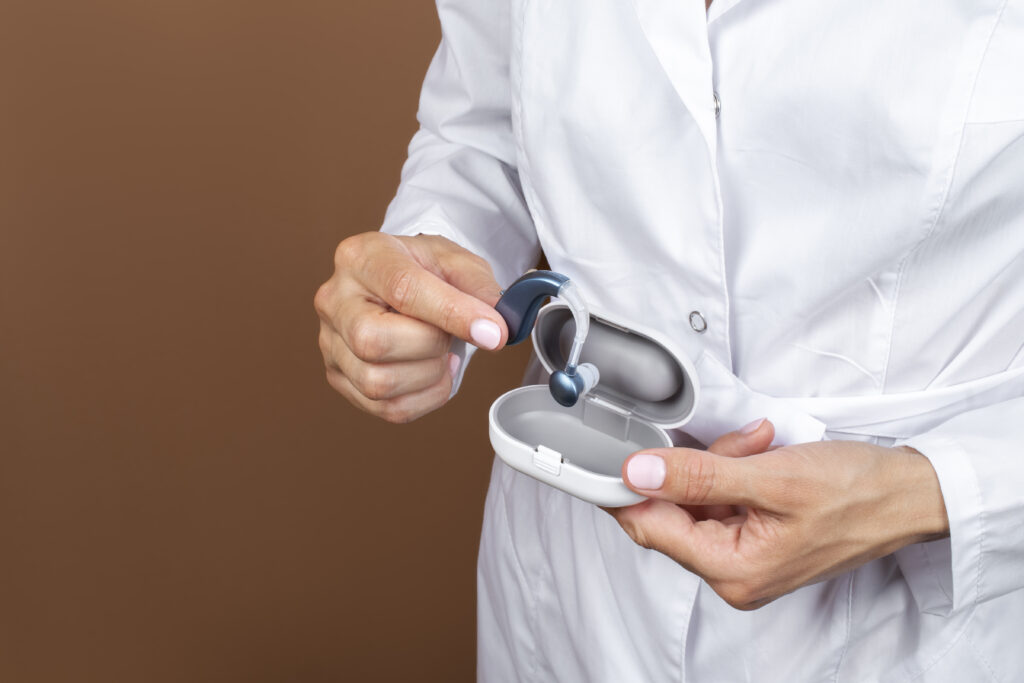
Real-Ear Measurement — Why We Don't Skip It
What happens at your appointment
Walk into Quest’s Amherst office and it does not look or feel like a hospital wing. There is no waiting room lined with pamphlets about disease. It looks more like somewhere you would go to understand a piece of technology, because that is closer to what is actually happening.
A fitting appointment typically includes:
- A review of your hearing test results and what they mean in plain terms, not clinical shorthand
- Real-ear measurement, where a small microphone is placed in your ear canal alongside the hearing aid to measure the actual sound reaching your eardrum, live, while adjustments are made
- Fine-tuning based on that measurement, not on a generic starting point
- Time spent on how the devices work day to day, including what you will notice in the first few weeks as your brain adjusts to sound it has not been receiving
Most fittings run about 60 to 90 minutes. You leave with devices programmed to your ears specifically, and with a clear sense of what to expect next, including a follow-up visit to fine-tune anything that needs it once you have worn them in the real world for a while.

What to Expect at Your First Fitting Appointment
Review your audiogram together.
We walk through what the test showed before touching any device.
Check the physical fit.
The device or earmold needs to sit comfortably before programming starts.
Program to your results.
Initial settings are built directly from your hearing test, not a generic starting point.
Verify with real-ear measurement.
We confirm the device is delivering the sound it's supposed to, inside your actual ear canal.
Test it in conversation.
You'll hear speech at different volumes in the room before you leave.
Start your trial period.
You wear the devices in daily life and come back with notes on what needs adjusting.
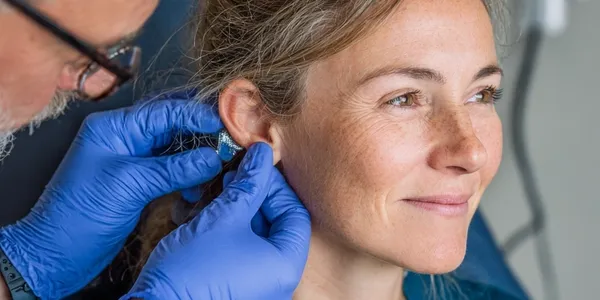
The Weeks After Your Fitting
The technology
Hearing aids have changed more in the last five years than in the fifteen before that. Modern devices now connect to phones, adjust automatically as a room gets louder or quieter, and in many cases can be fine-tuned remotely without a return trip to an office. Some run for a full day on a rechargeable battery, which matters if you have ever fumbled with tiny disposable batteries at a kitchen table.
None of this is about one brand being better than another. Quest does not push a preferred manufacturer, because the honest answer is that the right technology depends on your hearing profile, your lifestyle, and what you actually want out of better hearing experiences, whether that is following conversation at a crowded restaurant or hearing the television at a normal volume again. The point of the appointment is to walk you through the real options so you understand what you are choosing, not to steer you toward one.

Styles We Fit
Getting here from Amherst
Quest Audiology’s office is at 166 S River Rd Ste 110b in Amherst. From the Amherst village green, it is a straightforward drive east, mostly along Route 101, and typically takes about 15 to 20 minutes depending on the time of day. There is free parking directly at the office, so there is no garage to navigate or meter to feed before your appointment.
Receiver-in-canal (RIC).
Small, sits behind the ear with a thin wire to the canal. The most common style we fit for mild to moderate loss.
Behind-the-ear (BTE).
Slightly larger, built for more severe hearing loss or anyone who finds smaller devices hard to handle.
In-the-ear (ITE) and in-the-canal (ITC).
Custom-molded to sit inside the ear itself, for patients who prefer a less visible option.
Completely-in-canal (CIC).
The smallest and most discreet option, though not suitable for every hearing profile.

Why Amherst Residents Choose Quest Audiology for Their Fitting
Your audiologist
Your fitting is handled by {AUDIOLOGIST}, {CREDENTIALS}, who has spent {YEARS_IN_PRACTICE} working specifically with hearing diagnostics and personalized hearing solutions. That background is what real-ear verification actually depends on: knowing not just how to run the equipment, but how to interpret what it shows for your particular ears and your particular hearing loss. You can read more about that background and approach at {BIO_URL}.
Your Audiologist
Common questions
If you are ready to find out what a hearing aid fitting built around your ears actually feels like, Schedule a Hearing Test with Quest Audiology, or Call Today at (603) 824-3883.
Areas We Serve Near Amherst, NH
Quest Audiology also provides hearing tests for patients throughout the greater Manchester area, including:
Manchester
Merrimack
Litchfield
Goffstown
Hooksett
Nashua
Londonderry
Amherst
Milford
FAQs
How long does a hearing aid fitting take?
Plan on 60 to 90 minutes for the first appointment. Real-ear measurement and programming take time, and rushing it means more follow-up visits later.
Will the fitting feel uncomfortable?
The physical fit should feel secure but not painful. If anything pinches or rubs, tell us during the appointment — that gets adjusted before you leave, not after.
How many follow-up visits are included after my fitting?
Follow-up programming visits in the first few months are included. Most patients need one to three; a few need more, and that’s normal.
What if my hearing aids still don't sound right after the fitting?
That’s what the trial period and follow-up visits are for. Programming is adjusted based on what you’re actually hearing in daily life, not guessed at in one sitting.
Do I need to bring anything to my fitting appointment?
Just your ears and your recent hearing test results if you had one done elsewhere. We handle the rest.
Is there a trial period after the fitting?
Yes. Most devices come with a trial period so you can wear them through your normal week before committing to anything.
Ready to Schedule Your Hearing Aid Fitting in Amherst, NH
Learn About Modern Hearing Solutions or Schedule a Hearing Test to get started — the diagnostics come first, always. Prefer to talk it through? Call Today at 603-824-3883.
Quest Audiology
166 S River Rd, Ste 110B
Amherst, NH
603-824-3883