- 603-824-3883
- 166 S River Rd ste 110b, Bedford, NH, USA
Hearing Aids
Hearing Aids in Milford, New Hampshire
Around the Oval, the conversation about hearing loss tends to happen quietly, at the hardware store counter or after church, one neighbor mentioning that their spouse finally got tested. Milford is a town that solves its own problems and asks around before it drives anywhere, which is exactly why so many residents spend years noticing they miss words at the Union Diner or turn the TV up past what anyone else in the house wants before they look into what a modern hearing aid actually is.
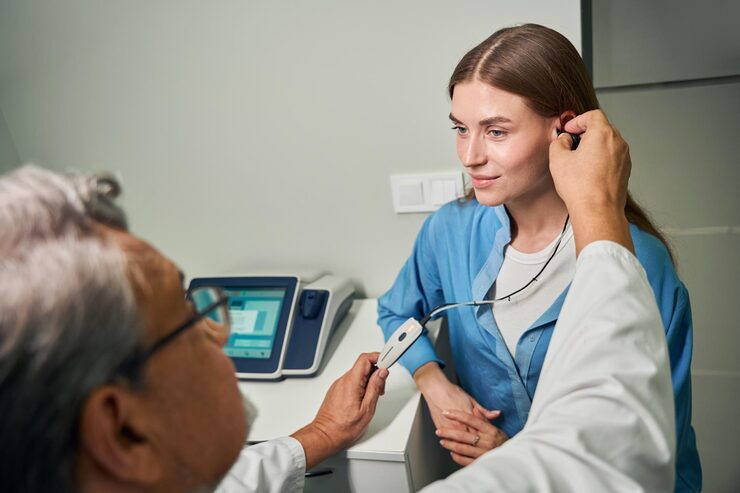
A Different Way to Think About Hearing Aids
Hearing Aids for Milford residents
If you are reading this, you are probably not ready to buy anything. You are trying to understand what a hearing aid does now, in 2024, versus the boxy version your grandfather wore. That is the right instinct.
A hearing aid today is a small computer tuned to your specific hearing pattern, not a generic amplifier. It does not just make everything louder. It separates speech from background noise, adjusts automatically as a room changes, and can be reprogrammed as your hearing changes over time. For someone in Milford who has spent a few years wondering whether their hearing has really changed or whether people have just started mumbling, this distinction matters. The device is not the starting point. Understanding your own hearing profile is.
Quest Audiology approaches this as a personalized hearing solutions process: diagnosis first, technology education second, fitting and support after that. Nobody walks in and gets sold a box.
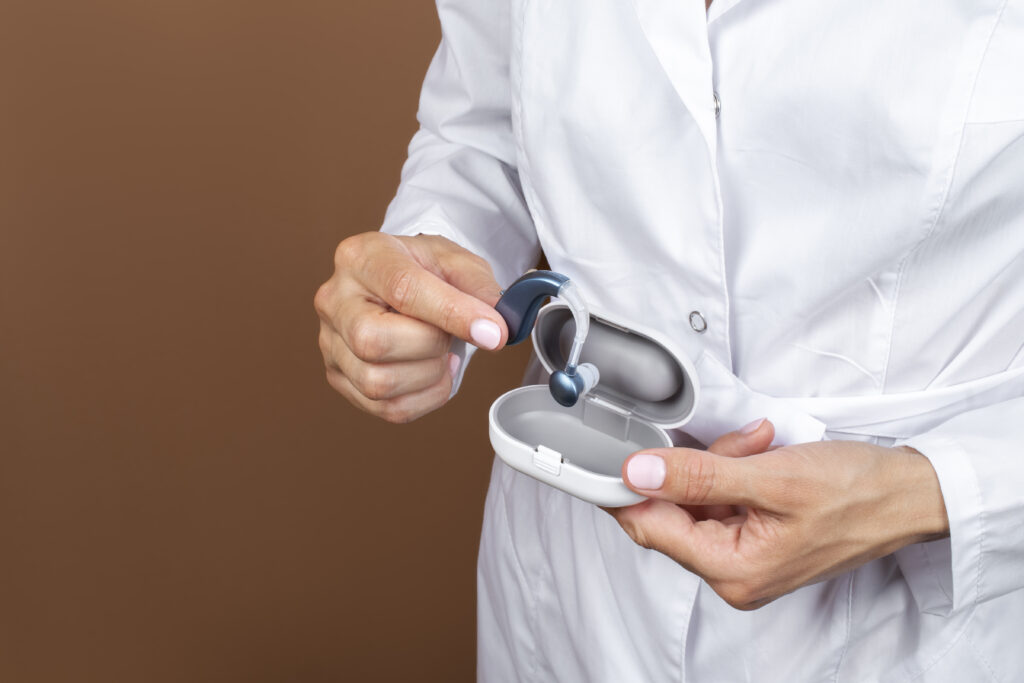
How We Match Technology to Your Hearing
What happens at your appointment
The space does not look or feel like a hospital wing. There is no waiting room lined with pamphlets about disease. It looks more like a technology showroom, because that is closer to what is actually happening.
A typical first visit runs about 60 to 90 minutes and includes:
- A conversation about what you have noticed and where it shows up, whether that is at Milford Rotary Club meetings, at the farmers market, or on the phone with family
- Advanced diagnostics using calibrated equipment to map exactly which frequencies and volumes are affected, and in which ear
- A plain-language walkthrough of your results, shown on screen, not read off a chart
- If appropriate, a hands-on look at current device categories, with no pressure to decide that day
You leave knowing your own hearing profile in specific terms, whether or not you move forward with any device. That is the point of the visit. An illustrative example: someone who struggles specifically with group conversation but hears television fine has a very different profile than someone who has trouble across the board, and the technology conversation is completely different for each.
Your audiogram sets the range.
The frequencies and volumes you're missing narrow down which devices can actually help.
Your lifestyle shapes the choice.
Someone who spends weekends at Milford Village Common events needs different noise handling than someone mostly on video calls at home.
You hear a few options, not one.
We're not tied to a single manufacturer, so the comparison is based on what works for your ears, not what's easiest to sell.
The fitting is programmed to you.
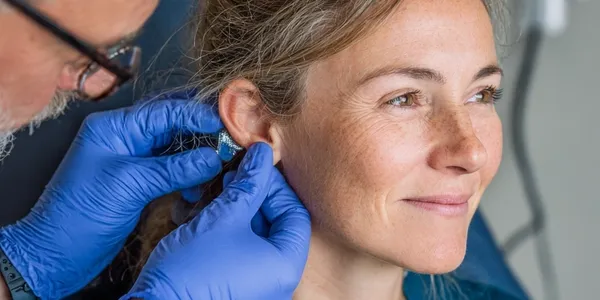
Once you choose, we fine-tune the device to your specific hearing test results, not a factory default.

What's Changed in Hearing Aid Technology
A lot of what people assume about hearing aids is a decade out of date. Current devices commonly include:
- Automatic adjustment between quiet rooms, traffic, and crowded restaurants
- Direct streaming from phones and TVs
- Rechargeable batteries instead of the small disposable ones
- Remote programming adjustments between visits
- Speech-focusing technology that filters background noise
The technology
What has changed in the last few years is worth understanding on its own terms.
- Rechargeable batteries have largely replaced disposable ones, so devices charge overnight like a phone instead of needing tiny batteries changed weekly.
- Direct streaming now lets many devices connect straight to phones and TVs over Bluetooth, without a separate accessory clipped to your shirt.
- Automatic environment sensing means the device adjusts itself walking from a quiet car into a noisy restaurant, rather than requiring a manual switch.
- Rechargeable, near-invisible form factors exist now at nearly every price point, which was not true even five years ago.
None of this means every option fits every person. Cost, degree of hearing loss, dexterity, and daily environment all factor in. Quest does not sell one manufacturer’s line as the answer for everyone. Part of the appointment is walking through categories so you understand tradeoffs before spending anything, which is the opposite of how a typical hearing aid store operates.
Styles of Hearing Aids We Fit
Getting here from Milford
Quest Audiology is at 166 S River Rd, Suite 110b, in Milford. From Milford, most people take Route 101 East and connect to South River Road, a drive that generally runs 15 to 20 minutes depending on traffic through Wilton Road and the Route 101A corridor. There is no Quest office in Milford itself. Parking is on-site and free, and the suite is on the ground level, no elevator or long hallway walk required.
Receiver-in-canal (RIC).
Small, sits behind the ear with a thin wire to the ear canal. The most common style we fit, and a good starting point for mild to moderate loss.
Behind-the-ear (BTE).
Slightly larger, built for more severe hearing loss or anyone who finds smaller devices harder to handle.
In-the-ear (ITE) and in-the-canal (ITC).
Custom-molded to sit inside the ear itself, for patients who prefer a less visible option.
Completely-in-canal (CIC).
The smallest and most discreet option, though not suitable for every hearing profile.
Your audiologist
{AUDIOLOGIST}, {CREDENTIALS}, leads care at Quest Audiology and has spent {YEARS_IN_PRACTICE} years in the field, working through the shift from analog devices to the connected, automatic technology available today. That range matters when someone from Milford sits down describing a hearing history that goes back decades. Read the full background at {BIO_URL}.
Support Doesn't End at the Fitting
Common questions
See the FAQ section below for specifics on cost, scheduling, and what to expect if you are coming from Milford.
If you have been putting this off for a while, the next step does not have to be a decision about a device. Schedule a Hearing Test to get a clear picture of where things stand, or Call Today at (603) 824-3883.

Why Milford Residents Choose Quest Audiology
A lot of our Milford patients come in the same way — a recommendation from someone at Milford Village Common, or a family member near Riddle Brook or Peter Woodbury who’s tired of repeating themselves at dinner. What keeps them coming back for hearing aids in Milford is the same reason they came in for the hearing test: nobody’s pushing a brand, and every adjustment afterward is included, not billed separately.
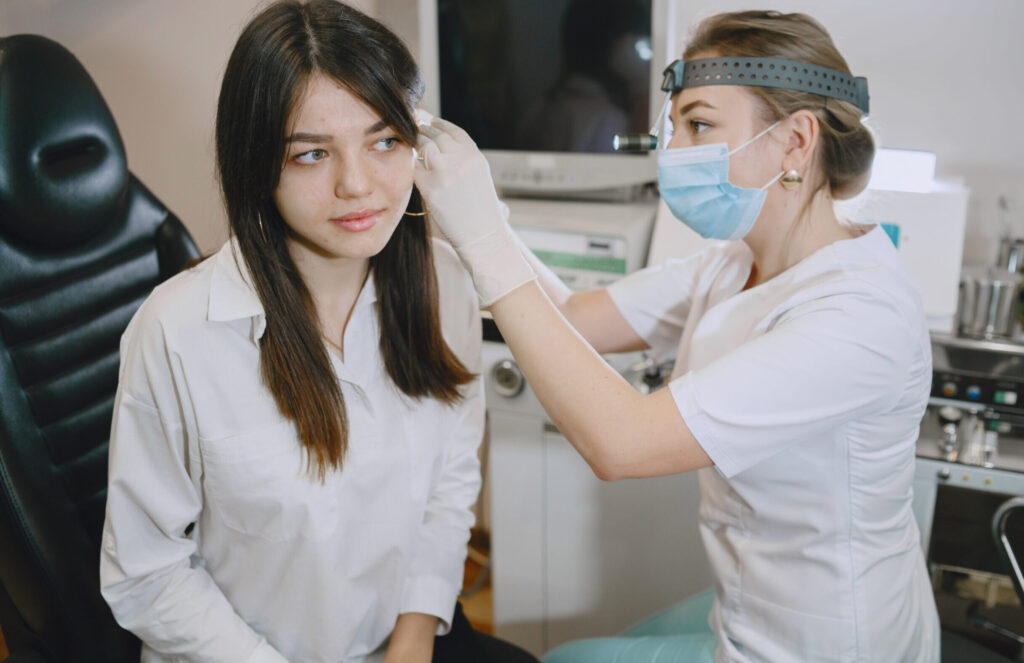
Your Audiologist
Every fitting is handled by a licensed, doctoral-level audiologist
Areas We Serve Near Milford, NH
Quest Audiology also provides hearing tests for patients throughout the greater Manchester area, including:
Manchester
Merrimack
Litchfield
Goffstown
Hooksett
Nashua
Londonderry
Amherst
Milford
FAQs
How much do hearing aids cost?
It depends on the technology level and your specific hearing loss. We’ll give you real numbers after your hearing test, not before.
Does insurance cover hearing aids?
Coverage varies by plan. We’ll check yours and walk you through what’s covered before you commit to anything.
Do I need a hearing test before getting hearing aids?
Yes. Fitting hearing aids without current diagnostics is guesswork — the test is what makes the fitting accurate.
Can I try hearing aids before committing?
Most devices come with a trial period so you can wear them in your actual daily life before deciding.
How long do hearing aids last?
Typically 4 to 6 years with proper care, though battery type and usage affect that range.
What happens if my hearing changes after I get hearing aids?
We reprogram the device to match. Hearing changes gradually, and most modern hearing aids can be adjusted without needing a full replacement.
Ready for Your Hearing Test in Milford, NH
Schedule a Hearing Test today, or Call Today at 603-824-3883 to find a time that works.
Quest Audiology
166 S River Rd, Ste 110B
Milford, NH
603-824-3883