- 603-824-3883
- 166 S River Rd ste 110b, Bedford, NH, USA

Tinnitus Treatment
Tinnitus Treatment in Amherst, New Hampshire
If you live near the Amherst village green and you’ve spent the last few evenings sitting in the quiet of an old farmhouse noticing a ringing that won’t stop, you’re not imagining it, and you’re not alone. Many Amherst residents describe the same pattern: the sound is barely noticeable during a busy day in Milford or Nashua, then becomes impossible to ignore once the house settles down at night. That contrast between daytime distraction and nighttime silence is often what finally brings someone in.

What Tinnitus Treatment Can (and Can't) Do
Tinnitus Treatment for Amherst residents
Tinnitus is the perception of sound, ringing, buzzing, hissing, or a low hum, when no external sound source is present. It is not a disease on its own. It’s usually a signal that something else is going on, often connected to hearing changes that have been building quietly for years.
There is no cure for tinnitus, and any provider who tells you otherwise is not being straight with you. What can honestly be offered is a thorough evaluation to understand what may be driving it, followed by management strategies that help many people find the sound less intrusive over time. That might include sound therapy, hearing technology programmed specifically for tinnitus, and practical strategies for the hours when it feels loudest.
If you’ve spent years telling yourself it’s not bad enough to look into, or you were told once before that nothing could be done, this page is written for that exact hesitation.
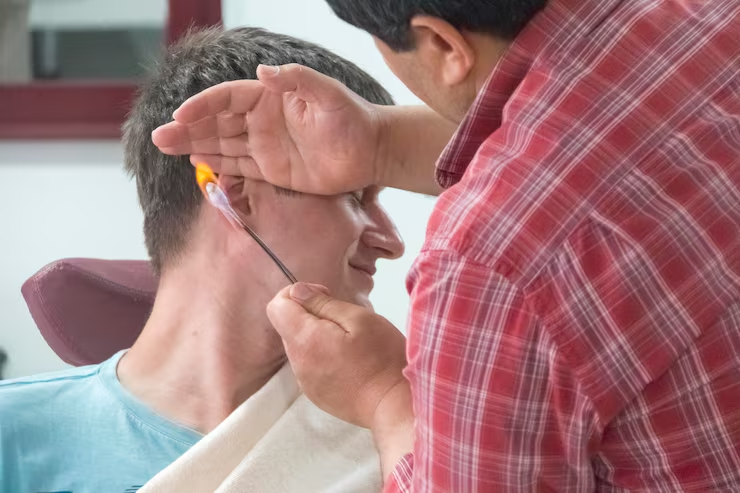
What Causes Tinnitus
What happens at your appointment
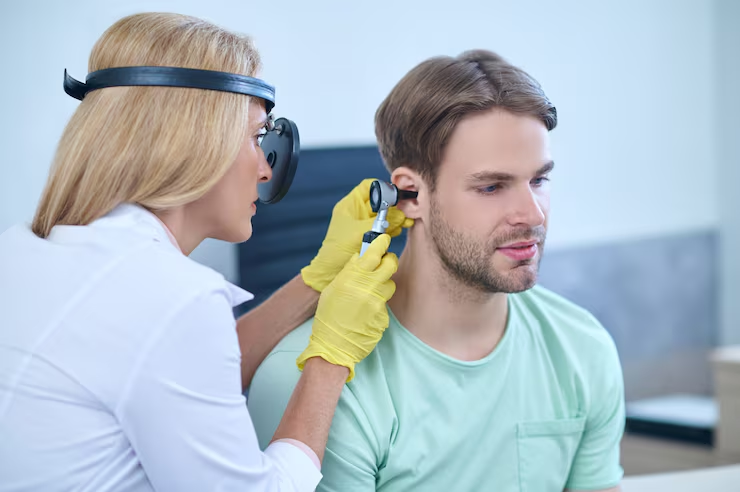
The Quest office in Amherst was built to feel more like a technology showroom than a waiting room. There’s no hospital signage, no clipboard full of forms before anyone even talks to you. You’ll sit down with an audiologist first and describe what you’re hearing, when it started, and what makes it better or worse.
From there, advanced diagnostics map out your hearing across the full range of frequencies, not just a quick pass/fail screening. This typically includes a hearing evaluation and, when appropriate, additional tinnitus-specific assessment to understand the pitch and character of what you’re hearing. The full appointment usually runs about an hour.
You’ll leave with a clear picture of what your hearing test actually shows, in plain language, and a specific plan for what comes next, whether that’s sound therapy, device-based masking, monitoring, or a referral if something outside our scope needs attention first. No pressure to decide anything on the spot.

How We Diagnose Before Treating
Full hearing evaluation.
Tinnitus and hearing loss overlap often enough that we check both together.
Tinnitus-specific assessment.
We ask about pitch, pattern, and what makes it better or worse — details that shape which approach fits.
Medical history review.
Certain medications and conditions are known tinnitus triggers, and we check for them before recommending anything.
Referral when needed.
If something points to a medical cause outside our scope, we'll refer you to the right specialist rather than guess.
Tinnitus Treatment Options We Use
Sound therapy and masking.
Background sound at a specific level can make tinnitus less noticeable, especially in quiet rooms.
Hearing aids with tinnitus programs.
If hearing loss is present, hearing aids often reduce tinnitus perception as a side effect of restoring sound input, and many current devices include built-in tinnitus settings.
Counseling and coping strategies.
Understanding tinnitus and learning how to respond to it changes how much it interferes with sleep, focus, and mood.
Trigger identification.
Caffeine, stress, certain medications, and loud environments can all worsen tinnitus for some patients — we help narrow down what applies to you.
What a Tinnitus Treatment Appointment Looks Like
The technology
What’s changed in the last several years is significant. Modern hearing technology used for tinnitus management isn’t a single device with one setting. It’s software-driven, adjustable in real time, and often doubles as a hearing aid for people who also have hearing loss alongside their tinnitus, which is common.
Some devices generate gentle background sound designed to reduce how noticeable the tinnitus is. Others focus on amplifying the everyday sounds a person has been missing, which can itself change how much attention the brain gives to the ringing. There isn’t one manufacturer or one approach that’s right for everyone, which is why the evaluation comes before any conversation about devices, not after.


Why Amherst Residents Choose Quest Audiology for Tinnitus Treatment
Getting here from Amherst
Quest Audiology’s office sits at 166 S River Rd, Ste 110b in Amherst. From the Amherst village green, it’s a straightforward drive, generally out along Route 101 toward the Everett Turnpike corridor, then a short stretch on S River Rd. Most Amherst patients tell us it takes somewhere in the range of 15 to 20 minutes depending on traffic through the Amherst/Nashua commercial stretch. Parking is on-site and free, with no garage to navigate and no meter to feed.
Your Audiologist
Your audiologist
Your evaluation and any ongoing care is led by {AUDIOLOGIST}, {CREDENTIALS}, who has spent {YEARS_IN_PRACTICE} working specifically in hearing and tinnitus care. You can read more about that background on the full bio page. The point of naming this isn’t credentialism for its own sake. It’s so that before you ever set foot in the office, you know exactly who you’d be talking to and what they’ve spent their career doing.
Areas We Serve Near Amherst, NH
Common questions
A few things Amherst patients ask most often before their first visit.
Manchester
Merrimack
Litchfield
Goffstown
Hooksett
Nashua
Londonderry
Amherst
Milford
FAQs
Is there a cure for tinnitus?
Not currently, for most cases. Treatment focuses on identifying causes where possible and reducing how much the sound affects daily life.
Will tinnitus go away on its own?
Sometimes, especially if it followed a specific event like loud noise exposure. Persistent tinnitus is less likely to resolve without some form of management.
Is tinnitus always linked to hearing loss?
Often, but not always. A hearing evaluation is still the right first step even if you don’t think your hearing has changed.
Can stress make tinnitus worse?
Yes, for many patients. Stress doesn’t cause tinnitus on its own, but it commonly makes existing tinnitus feel more intrusive.
Do hearing aids help with tinnitus?
For patients with hearing loss, often yes. Restoring sound input and using built-in tinnitus programs both tend to reduce how noticeable it is.
How long does tinnitus treatment take to show results?
It varies. Some patients notice a difference within weeks of starting sound therapy or hearing aids; others need a longer adjustment period.
Ready to Schedule Your Hearing Aid Fitting in Amherst, NH
Request a Consultation or Schedule a Hearing Test to get a clear picture of what’s driving your tinnitus. Prefer to talk it through first? Call Today at 603-824-3883.
Quest Audiology
166 S River Rd, Ste 110B
Amherst, NH
603-824-3883