- 603-824-3883
- 166 S River Rd ste 110b, Bedford, NH, USA

Hearing Aid Fittings
Hearing Aid Fittings In Milford, New Hampshire
Milford does not run its errands through Nashua, and it does not send its hearing questions there either. Most people around the Oval who have been putting off a hearing test have either driven north on the Everett Turnpike toward Milford or asked a neighbor who already made the trip, because Milford’s own downtown, for all its independent shops and river-mill character, does not have an audiology practice of its own.

What Actually Happens During a Fitting
Hearing Aid Fittings for Milford residents
A hearing aid fitting is not the moment you pick up a box off a shelf. It is the appointment where a device that was built to a general specification gets adjusted to your ears specifically, using measurements taken from your actual ear canal while the device is running.
If you are reading this in year two or three of noticing that meetings feel harder to follow, or that the TV volume has become a small argument at home, this is the step that comes after diagnosis and before you settle into daily use. It is where the technology stops being generic and starts being personalized hearing solutions built around how your ears actually receive sound.
This matters even more if you have already tried a lower-cost or online option. Devices set to an average profile can sound tinny, hollow, or just not quite right, not because the hardware is bad, but because nobody measured how your ear canal shapes sound before they programmed it.
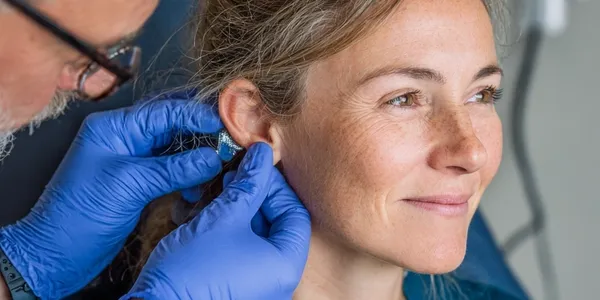
Real-Ear Measurement — Why We Don't Skip It
What happens at your appointment
The room does not look like an exam room. There is no clipboard on a wall, no waiting area lined with pamphlets about batteries. It is closer to a quiet, well-lit space where you sit across from someone who explains what they are doing as they do it.
Here is the sequence, in plain terms:
- Real-ear measurement. A thin, soft probe tube is placed just inside your ear canal alongside the hearing aid. It measures the actual sound reaching your eardrum, not an estimate.
- Verification against your ear, not a chart. Your results are compared to targets built specifically for your hearing profile, and the device is adjusted live until the sound matches.
- Real-world settings. You will listen to speech, background noise, and everyday sound scenarios in the room, and adjustments happen on the spot.
- A plan you understand. You leave knowing how to use the device, what the follow-up schedule looks like, and who to call if something feels off in the first weeks.
Most fitting appointments run about 60 to 90 minutes. Nobody rushes you out once the clock hits a number.

What to Expect at Your First Fitting Appointment
Review your audiogram together.
We walk through what the test showed before touching any device.
Check the physical fit.
The device or earmold needs to sit comfortably before programming starts.
Program to your results.
Initial settings are built directly from your hearing test, not a generic starting point.
Verify with real-ear measurement.
We confirm the device is delivering the sound it's supposed to, inside your actual ear canal.
Test it in conversation.
You'll hear speech at different volumes in the room before you leave.
Start your trial period.
You wear the devices in daily life and come back with notes on what needs adjusting.
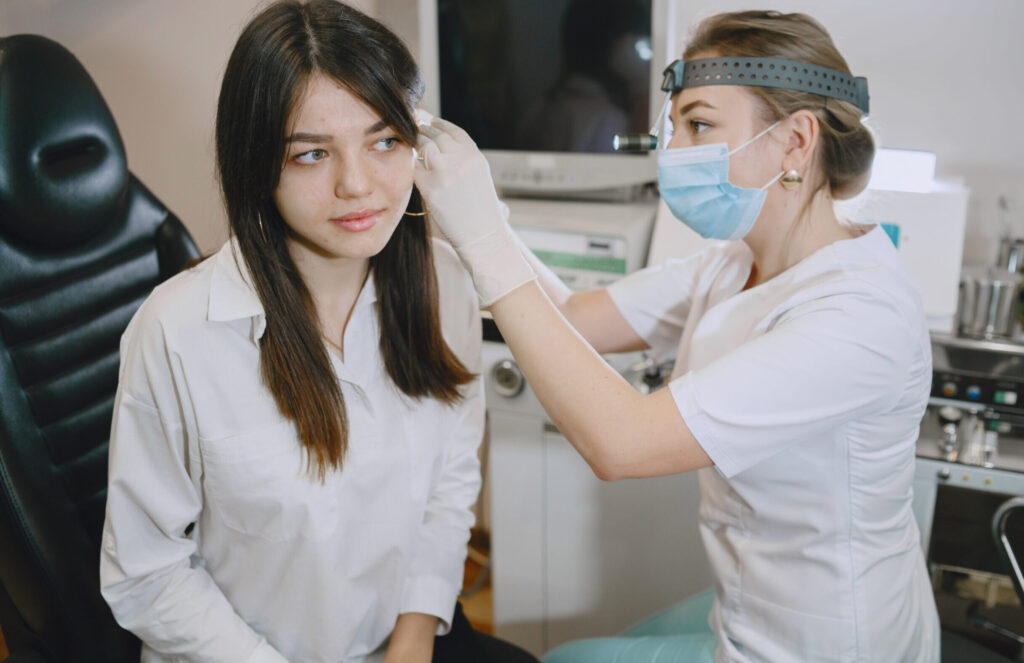
The Weeks After Your Fitting
The technology
Modern hearing technology has moved a long way past the idea of a simple volume amplifier. Current devices process sound in bands, separate speech from background noise using multiple microphones, and adjust automatically as you move between a quiet living room, a car, and a crowded restaurant.
Many now connect directly to phones and televisions, rechargeable batteries have mostly replaced the tiny disposable ones, and some devices can be fine-tuned remotely after your initial fitting, so small adjustments do not always require another drive to an office.
None of that replaces the verification step. A well-built device that was never measured against your ear is still guessing. The fitting is what turns a piece of technology into something that fits you specifically.
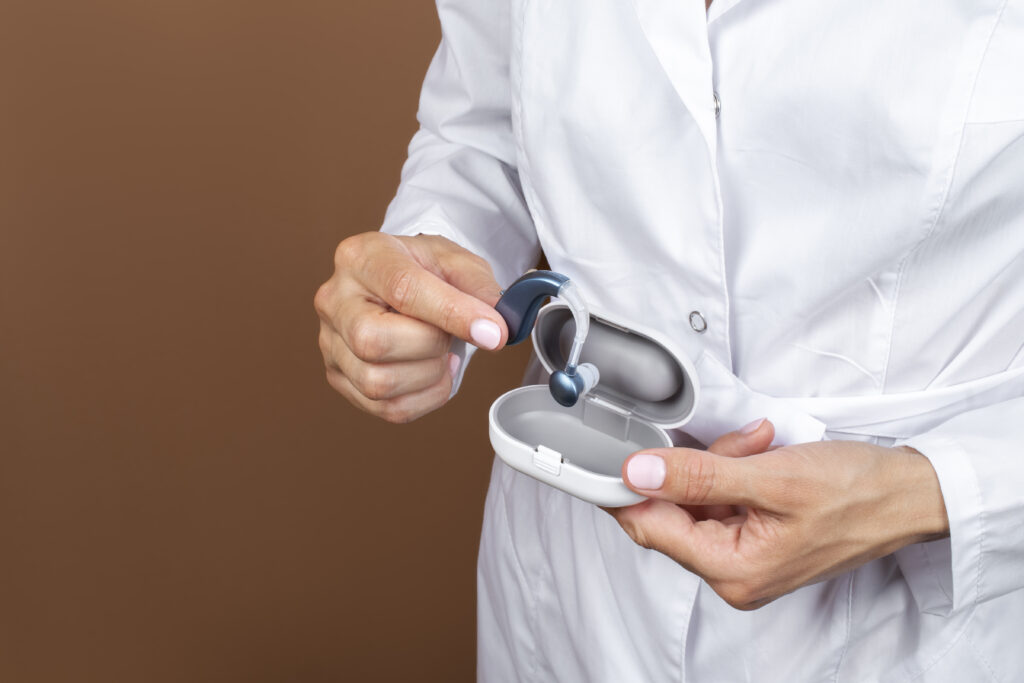
Styles We Fit
Getting here from Milford
Quest Audiology’s office is at 166 S River Rd Ste 110b in Milford. From central Milford, most people take Route 101 East, which becomes a straightforward run into Milford before connecting to South River Road. On typical traffic it is roughly a 20 to 25 minute drive, shorter than the commute plenty of Milford residents already make for work. Parking is on-site and unassigned, so there is no separate lot to search for or ticket to pull.
Receiver-in-canal (RIC).
Small, sits behind the ear with a thin wire to the canal. The most common style we fit for mild to moderate loss.
Behind-the-ear (BTE).
Slightly larger, built for more severe hearing loss or anyone who finds smaller devices hard to handle.
In-the-ear (ITE) and in-the-canal (ITC).
Custom-molded to sit inside the ear itself, for patients who prefer a less visible option.
Completely-in-canal (CIC).
The smallest and most discreet option, though not suitable for every hearing profile.

Why Milford Residents Choose Quest Audiology for Their Fitting
Your audiologist
Your fitting is handled by {AUDIOLOGIST}, {CREDENTIALS}, who has spent {YEARS_IN_PRACTICE} working through exactly this kind of appointment, the quiet, technical, one-on-one work of matching a device to a person rather than a chart. You can read more about that background on the full bio page before you ever set foot in the office.
Your Audiologist
Common questions
Areas We Serve Near Milford, NH
Quest Audiology also provides hearing tests for patients throughout the greater Manchester area, including:
Manchester
Merrimack
Litchfield
Goffstown
Hooksett
Nashua
Londonderry
Amherst
Milford
FAQs
How long does a hearing aid fitting take?
Plan on 60 to 90 minutes for the first appointment. Real-ear measurement and programming take time, and rushing it means more follow-up visits later.
Will the fitting feel uncomfortable?
The physical fit should feel secure but not painful. If anything pinches or rubs, tell us during the appointment — that gets adjusted before you leave, not after.
How many follow-up visits are included after my fitting?
Follow-up programming visits in the first few months are included. Most patients need one to three; a few need more, and that’s normal.
What if my hearing aids still don't sound right after the fitting?
That’s what the trial period and follow-up visits are for. Programming is adjusted based on what you’re actually hearing in daily life, not guessed at in one sitting.
Do I need to bring anything to my fitting appointment?
Just your ears and your recent hearing test results if you had one done elsewhere. We handle the rest.
Is there a trial period after the fitting?
Yes. Most devices come with a trial period so you can wear them through your normal week before committing to anything.
Ready to Schedule Your Hearing Aid Fitting in Milford, NH
Learn About Modern Hearing Solutions or Schedule a Hearing Test to get started — the diagnostics come first, always. Prefer to talk it through? Call Today at 603-824-3883.
Quest Audiology
166 S River Rd, Ste 110B
Milford, NH
603-824-3883